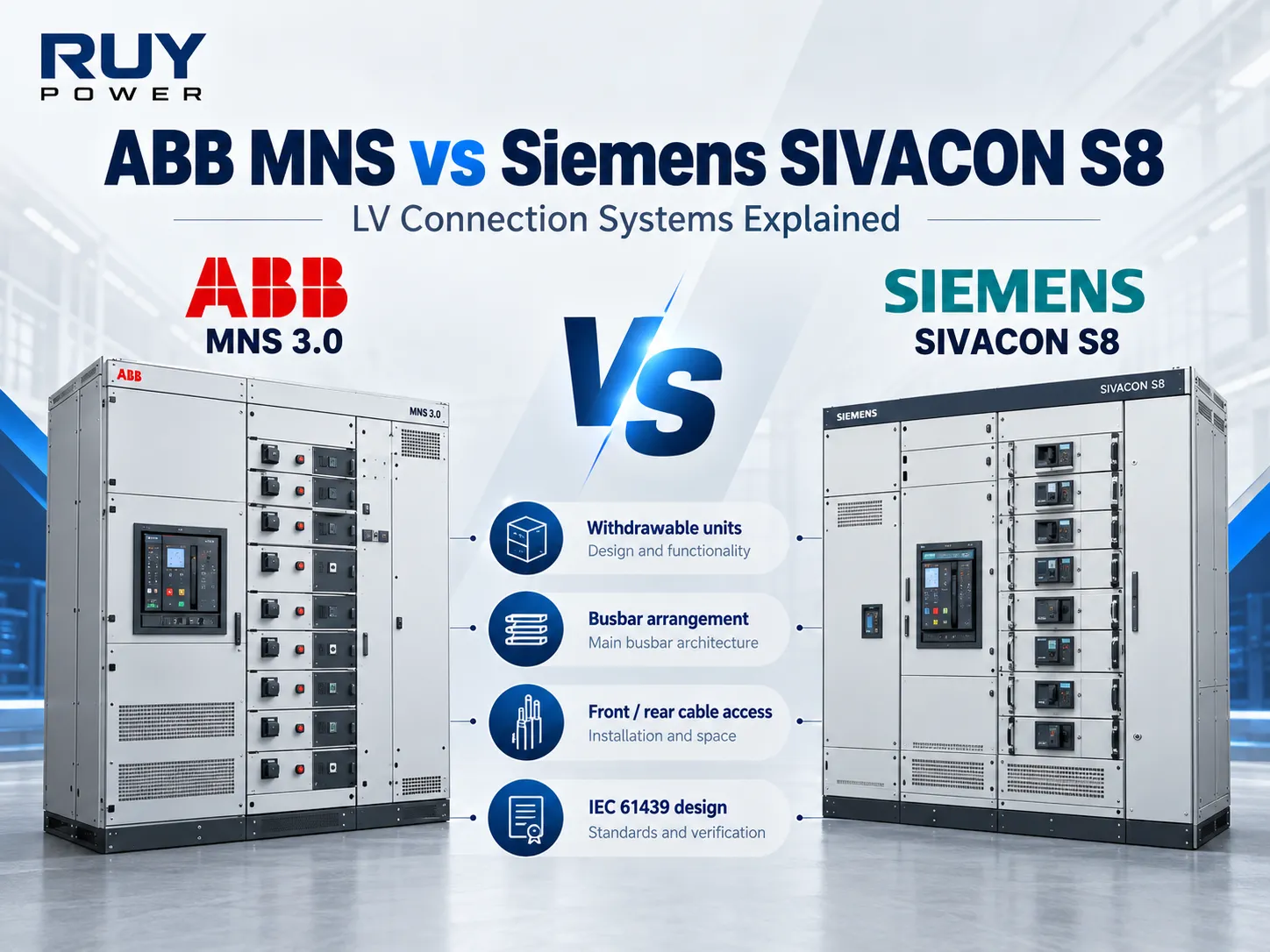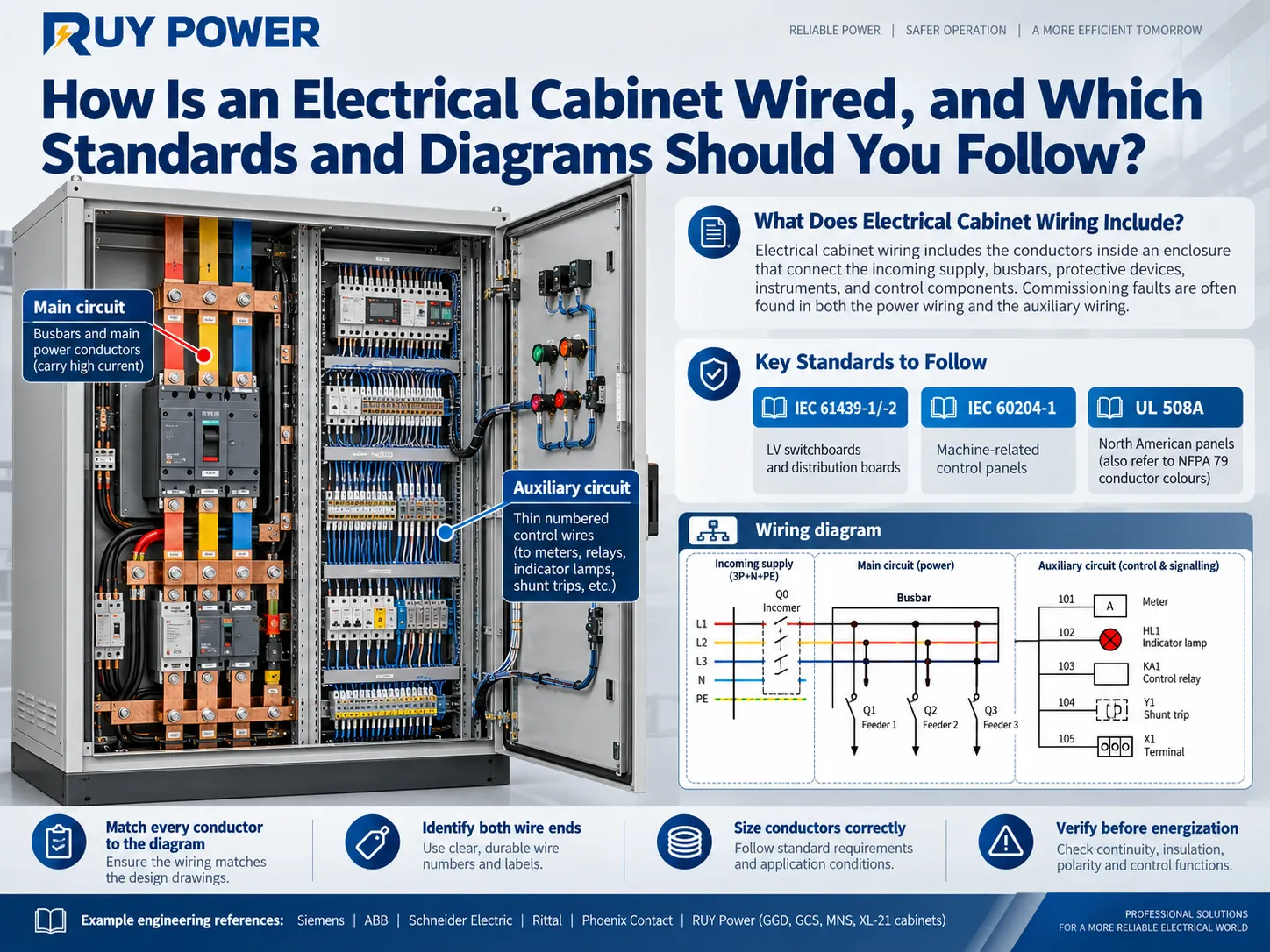

The term MCC can be loose in meaning, since it can have several meanings. For example, motor control center, Manchester college and a code used on phone bills, which might mean that the acronym can have different meaning when used in manufacturing industry.
For the rest of the article, one would learn about the definition of MCC and about its components and different types of MCC systems as well as those parameters that determine the price of the MCC and usage in different industries.
which means that it contains motor power circuit made up of industrial equipment where electricity moves through a bus. MCCs have some elements that can be moved and referred to as sections. MCCs produced in North America comply with the requirements of UL 845 and NEMA ICS-18, whereas MCCs made in other countries meet the standards of IEC 61439-1 and 2.
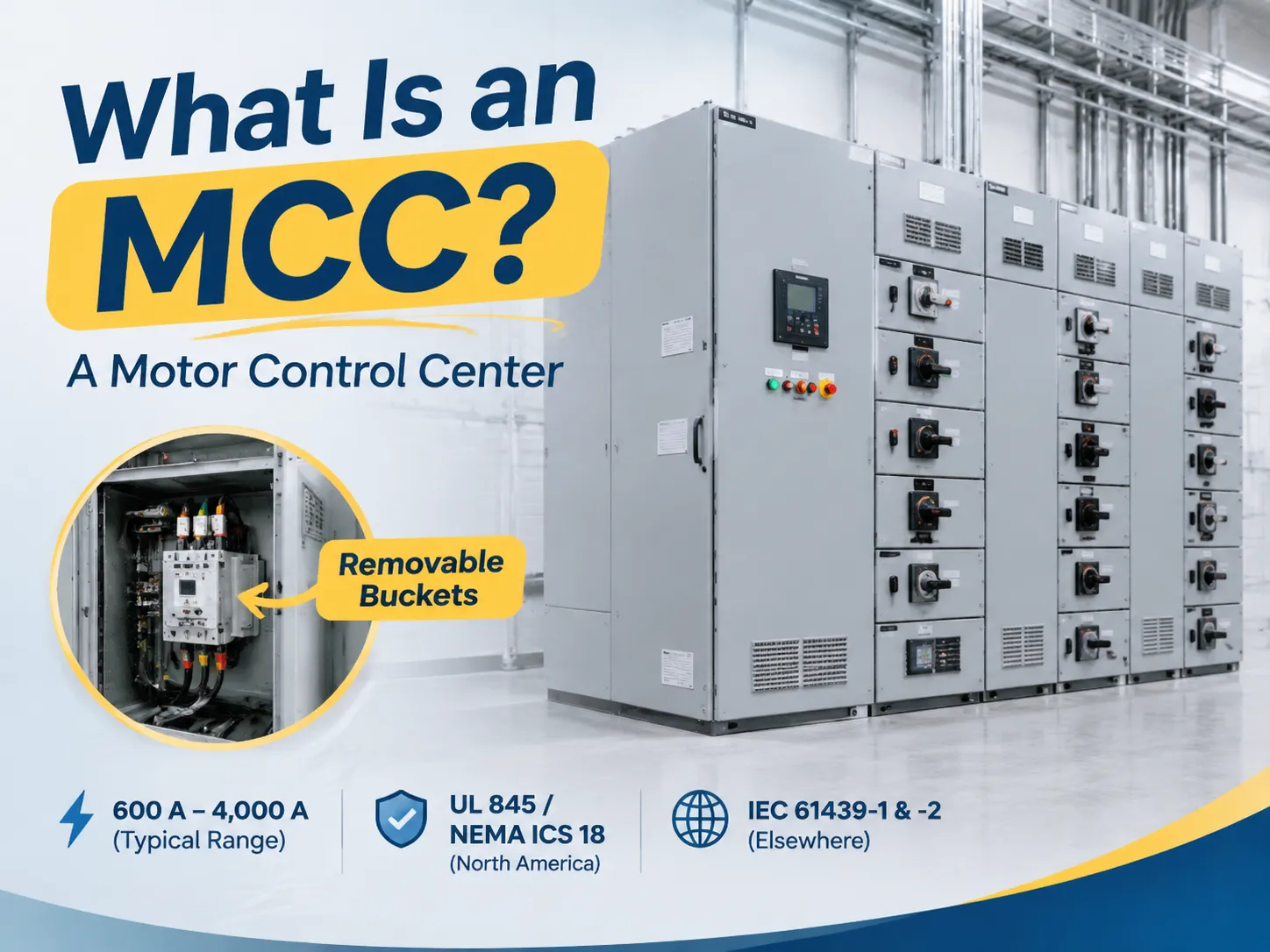
What a Motor Control Center Is, Beyond the Definition
The basic textbook definitions of Master Control Centers (MCCs) is simple and somewhat pointless. A more efficient way toward understanding what MCCs are indeed is to analyze what it has replaced.
In the past before 1950s, a factory which employed sixty motors had a respective number of units accommodated on the plant walls. The total number of units was sixty along with quitting it impossible to observe anything from any single point. Nowadays everything is replaced with one single system composed of one feed, one functional busbar along the line of sixty motors.
The bright side of this modular design is that nowadays MCC delivers greatly improved service in comparison to what was previously done in spite of the presence of certain slightly modified characteristics. The standard vertical section is about two thousand two hundred and eighty-six millimeters in height and five hundred and eight millimeters in width with regards to this modular design decreasing the distances between those sections down to one hundred and fifty two millimeters approximately. Thus, a section can accommodate several small buckets or large buckets.
But what really matters for operational outcome is the transformation of operations due to the failure of a starter. Instead of being delayed for twenty minutes a process may continue without any problems at all. If a motor needs to be replaced the process is identical even if a whole wall has to be modified when using ordinary starters.
Not Every MCC Is a Motor Control Center
It is worthwhile to clarify the acronym as there are certain confusions surrounding it and hence it wastes time for many people to land on the wrong page.
In electrical engineering, the term MCC refers to motor control center and the related acronym MCCB refers to molded case circuit breaker which in fact indicates a component within a bucket and not the assembly per se. Confusion between these two is a common occurrence and the specifications often mention the request “MCC panels” when in fact a distribution board is called for.
As far as other applications of the acronym MCC are concerned, in non-electrical engineering fields the acronym indicates the Millennium Challenge Corporation the agency of foreign aid that is American; or Mobile Country Code which is the first three digits of IMSI identifying the country of a mobile phone company; or merchant category code which is the four digit identifier used by a card company to tell what sort of retailer it is, it may also refer to different words.
There is also a third source of confusion within the industry. The suppliers claim that any low voltage assembly can be called an MCC including distribution boards with a few feeders. In order to distinguish whether a unit is an MCC the factor to consider is density and modularity of that unit, if compartments are done according to standards and plug in to vertical bus then they are called MCCs.
The Anatomy of a Lineup: Bus, Sections and Buckets
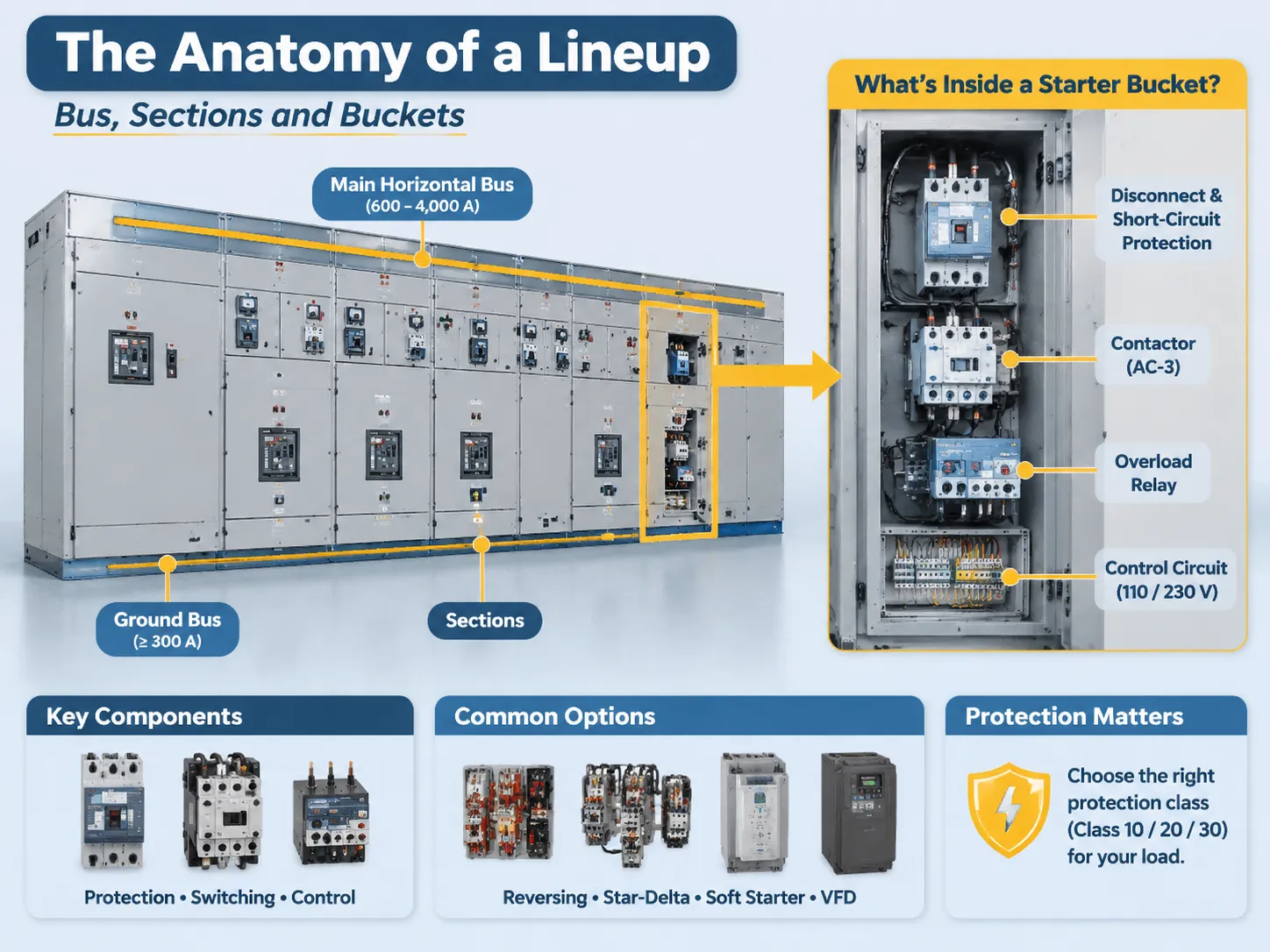
There are three bus systems, one steel structure, and one pile of removable units. That is it.
The main horizontal bus runs from one end to the other and carries the incoming electric supply. The common ratings of this active bus are in steps of 600, 800, 1200, 1600, 2000, 2500, 3000, and 4000 A. Copper is more or less the only material used. Aluminium is used in certain cases where the extra cost is justified and the battery is larger.
There is a vertical bus inside every compartment which picks the power from the main bus and feeds it to the buckets. Its usual rating is 300 or 600 A. Additionally, it has to be secured so as to protect the fingers from the electrical contacts while isolating the casing.
The earth bus from the capacity point of view is usually half the main bus capacity with minimum 300 A threshold, and that’s not the point to save costs. Most of the incidences of fault current flow through this bus on its way to earth.
The steel is load-bearing in a commercial sense as well. The sections are connected together using bolts and gland plates allowing entry of cables from the either side. The assembly is designed in a special way to prevent propagation of electric faults in one compartment to another compartment. A withdrawable assembly of this type, built in the GCS format, shows the section and bucket arrangement in this low-voltage withdrawable switchgear range.
What Sits Inside a Starter Bucket
A full-voltage starter bucket consists of four pieces of equipment plus the control circuit. All other components are variations.
- Disconnecting and overcurrent protection. Molded case breakers or fuse disconnects, rated for the available fault current at that point in the circuit. Using too little protection is the most frequent specification problem. This occurs because the rating of the bucket is not equal to the rating of the lineup.
- Contactor. The switching device, selected based on the utilization category. Most specifications refer to AC-3, which takes into consideration the fact that breaking an operating motor puts a larger strain on the contacts than breaking rated current in a resistive circuit.
- Overload relay. Thermal or electronic protection rated according to the motor full-load current rather than according to the contactor’s rating. In this case, it is necessary to take into account how long the device will withstand the start in accordance with the trip class. Thus, for class 10, 7.2 times the rated current is allowed for about 4-10 seconds and for class 20 – about 6-20 seconds. Usually, pumps and fans require class-10 protection, whereas high-inertia loads, such as large fans, crushers, and mills require classes 20 or 30.
- Control circuit. Control power transformer regulating voltage down to 110 or 230 volts and providing start-stop scheme and indication of control settings; the communications port is being added more frequently. The transformer is what is always omitted in buyers’ specification and without it the bucket cannot be put into operation for the date.
On top of this basis, various variations are added, such as reversing starters with electrical and mechanical interlocking, star-delta starters and soft starters, as well as electromagnetic drives. Electromagnetic drive has its requirements as it requires removal of heat from the terminal box and changes the heat behavior of the motor, which necessitates changing the setting of protection with the change of the type of starter.
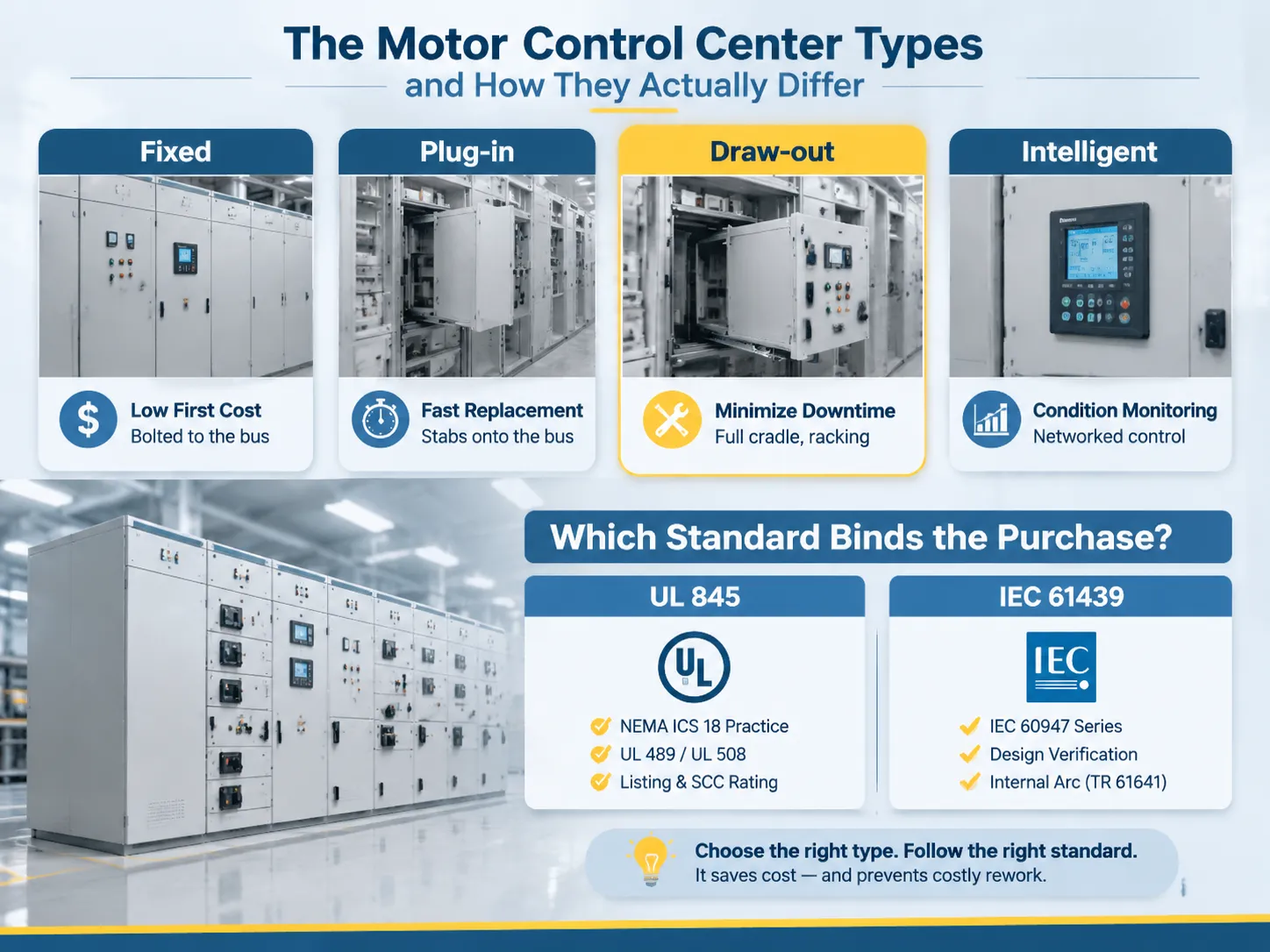
The Motor Control Center Types, and How They Actually Differ
Normally, price is the determining factor when buyers make comparisons, with construction coming second. This is wrong since what construction entails is what will determine maintenance costs over the next twenty years.
| Type | How the unit connects | Where it earns its premium |
|---|---|---|
| Fixed | Bolted to the bus, no withdrawal | Low first cost, stable loads that rarely need work |
| Plug-in | Stabs onto the vertical bus, unit lifts out | Fast replacement without touching the bus |
| Draw-out | Full cradle, racking mechanism, isolated position | Critical lineups, live work avoidance, planned maintenance |
| Intelligent | Networked motor management instead of hardwired control | Per-motor current, thermal load, trip cause and run hours |
In the case of a processing plant, it is the drawn-out version that should be advocated, not because of inherent engineering superiority but due to the fact that more work will be performed in the workshop instead of in the field. A maintenance team which can now take apart a unit and replace it in minutes can really run a preventive maintenance programme. On the other hand, if the team has to perform de-energizing of an area, it is likely to delay maintenance procedures.
What defines the intelligent version is the concept where the thermal relay and a set of wires is replaced by an electronic motor management relay that performs the function of control through a fieldbus. The solution may include devices from different manufacturers, such as Siemen’s SIMOCODE pro and Schneider’s TeSys T as the software would be provided by Rockwell’s IntelliCENTER. However, it should be understood that the main value of this technology lies not in the possibility to create a monitoring system. Rather, it lies in the fact that collecting data on the current of a motor allows to detect any problems before they cease to work.
An electronic format of the same assembly, with the unit arrangement visible, is shown in this MNS type withdrawable switchgear assembly. The construction question to ask of any supplier is which of these four types they actually build, because a factory that only makes fixed assemblies will quote a draw-out job by adding a premium to the same box.
Which Standard Binds the Purchase: UL 845 or IEC 61439
This decides more about the price than the component list does, and it is settled far too late on most projects.
| Question | North American practice | IEC practice |
|---|---|---|
| Product standard | UL 845, with NEMA ICS 18 construction practice | IEC 61439-1 and 61439-2 |
| Component standards | UL 489 breakers, UL 508 contactors | IEC 60947-2 and 60947-4-1 |
| Verification | Listing and short-circuit current rating marked on the label | Design verification by the system manufacturer, routine verification by the panel builder |
| Internal arc | Addressed through the listing and engineering assessment | IEC TR 61641 gives the test criteria for internal arc containment |
| Typical market | US, Canada, and export plants selling into them | Europe, Asia, Middle East, Africa, Latin America |
The error that must be prevented is thinking of the two as being one and the same thing as the diagrams are identical. The colour coding of wires and terminals, procedures for confirming short-circuit current capacity, and the level of internal separation are all different in each case. The most common type of rework that will take place on greenfield projects in Central and South America and Asia is when IEC assembly is converted to UL 845 after manufacturing and this will cost more than making a decision in the piping and instrumentation diagram stage.
Whatever the regime is, the questions that need to be asked by the buyer in writing must be the same: which standard has been used, which version of it, who completed the verification, and what documents are attached to the assembly. A one-page answer that will present the name of the standard, the version, and the testing report will be much more beneficial than a statement of compliance in a brochure.The answers to the common rating and verification questions are collected in this switchgear and MCC FAQ, which is the fastest way to see whether a supplier can answer precisely.
Where Motor Control Centers Are Used, by Industry
The common theme is the collection of motors which should work together. Two motors do not warrant an arrangement; however, if fifteen are in a given area, they do.
- Water and sewage. A typical instance where lots of motors, alternating operations, wet well level control. There are also a regulatory requirement to maintain the records. The breaker in this case is usually smart because information about run hours and time of starts is important when planning maintenance.
- Oil and gas and petrochemicals. Bigger motors, more extreme environments, and preference for removable designs for anything that cannot be turned off. In this industry, sets of motors are often designed to be arc resistant and accompany a load list that changes in the process of awarding the contract.
- Mineral and mining. Belt conveyors, crushers, and fans, most often involved in high-starting inertia and making overload relays Class 20 or 30 which leads to including soft starters. Remote locations lead to including spare parts management in the purchase price and being concerned with using the same type of bucket in one location rather than various designs. The duty profile for this sector is set out in this look at mining power distribution applications.
- Food and beverage. It involves washdown conditions, stainless or painted covers with high IP, along with many cleaning procedures to punish anything with a horizontal edge. Hygiene requirements frequently determine the enclosure, while the electrical design comes afterward.
- HVAC and building technology. This includes large air handling and cooling systems with the MCC sitting beside the plant room, while the smart one provides benefits in energy reporting rather than uptime.
What a Motor Control Center Costs, and Why the Number Moves
Any trustworthy factory never states an MCC price from a price list because the MCC configuration is not selected. What can be specified is the layout of the MCC lineup as that is what a customer wants to see in the quote.
The pricing is created starting from the bucket. An IEC bucket with one full-voltage starter may cost low-four digit prices after the breaker, contactor, overload, control transformer, indication, and enclosure are included in the price. A star-delta bucket or a reversing bucket costs more than that. A bucket with a variable frequency drive costs significantly more than that because the cost of the variable frequency drive is the main component while the enclosure should also be ventilated.
A section of ten small buckets includes steel, vertical bus, internal separation, and wires, which is where the assembly markups are built in. For process plants, the cost of the entire lineup is a six-figure number and the busbar rating is usually high enough to incur this number, as the 4,000 A busbar and high short-circuit withstand is not equivalent to 600 A busbar.
There are five main elements affecting the pricing. First is the short-circuit withstand which defines the bracing and the component ratings. The second is the level of internal separation and construction type. Third is whether the equipment is draw-out or not. The fourth element is whether the assembly is UL 845 listed or IEC 61439 verified since the route of certification impacts the price. The fifth is the spare capacity of the MCC lineup requested by the customer because a 15% or 20% empty position in the bucket should be normal while 40% empty buckets should be questioned.
Choosing a Manufacturer Without Getting Burned
Six queries, and the replies can determine whether the lineup will still be in use ten years from now.
- First is which standards and which version along with design verification document and routine test certificate information.
- Next is what is produced internally because in the case of a supplier being merely an assembler, he is dependent on the lead time of all other suppliers involved in the production of circuit breakers and drives.
- The third question requires that the buckets which the factory actually produces are mentioned, and not those which can be found on the company’s website.
- Then there is the question about the buckets being available five years later and the fact whether the enclosure system is open or closed.
- The fifth question is about arc flash data which means the information about the incident energy calculation for the lineup as it is configured and not a general example.
- The last question refers to the entity that orders the lineup and the documentation provided by the supplier.
Our own position is that of a factory rather than a project house. We build the assembly, we do not design the plant, and the manufacturing process behind the low-voltage assemblies is where the answer to questions two and three actually lives: busbar fabrication, forming, wiring and routine testing under one roof, with the design verification route documented and not assumed.
FAQ
What does MCC stand for in electrical work?
Motor control center. It is made of steel and comprises starter buckets that are removable for numerous motors having a common busbar configuration. Do not mistake it for MCCB, which refers to molded-case circuit breaker components inside the bucket and is a completely different component.
What is the difference between an MCC and a switchboard?
The switchboard is used for the distribution of power to feeders. Meanwhile, the MCC has the purpose of controlling and protecting motors as its compartments have a standardized design that allows the removal and replacement of the starter unit. It is a usual practice that many plants have both: the switchboard and MCC are present and adjacent to each other in most cases.
How many motors justify a motor control center?
Typically, the standard threshold is six or so. The key element is coordination, not the number of motors. If the motors have to operate in a certain order, share interlocks, or report to a single control, then you have quickly paid for the installation.
What is an intelligent MCC?
It is one wherein electronic management relays that are linked with the network, do away with thermal overloads and have hardwired control. The control unit knows about the trip cause, per motor current, thermal capability, and run hours, so it transforms protection into condition monitoring and limits the control wires to just the single network cable for each unit.
Can an MCC be extended later?
Yes, if it was intended for this purpose. The parts can be attached and additional buckets can be inserted, but only if the busbar has enough capacity to handle potential load and still remain safe when it comes to overloads. This is the reason why bus capacity and spare availability should be determined during the designing process and for why there is a strong case to have some spare buckets around (15% to 20%) even despite the cost.
References
- NEMA — Motor Control Centers and Low Voltage Distribution Equipment
- UL Solutions — UL 845 Motor Control Centers
- Siemens — Motor Management and Control Products
- ABB — Low Voltage Motor Control and Protection
- U.S. Energy Information Administration — Today in Energy
Conclusion
The components of a Metal Clad Switchgear are a metal base where the bus bar is mounted and several adaptations that compriseMOQv, thus allowing exchangeability of MCC. The buyer should not buy an MCC on the basis of its components, but on the basis of the guarantee that such equipment will be satisfactory to the relevant standards.
The operation of the equipment for ten years is through two aspects: the busbar capacity and remaining reserve capacity. These two parameters must be correctly determined at the design stage, as any modification in either of them later will incur substantial costs.